

“Was America Founded as a Christian Nation?” A Conversation with Historian John Fea
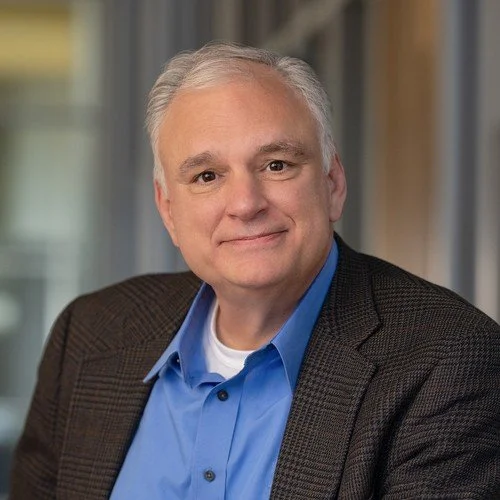
Historian John Fea delivered a lecture on June 22, 2026, at Philadelphia’s Historic Christ Church as part of the Dialogue Institute’s Religious Freedom Trails programming for America 250.
Fea is the author of “In God We Trust: Was America Founded as a Christian Nation?” published by Westminster John Knox Press in September 2026. You can also watch his interview with Judy Woodruff from PBS News while sitting in Christ Church.
Fea addresses six major points regarding the historical question in the newest edition of his book. The lecture is followed by a conversation moderated by David Krueger, executive director of the Dialogue Institute. The full transcript, edited for concision and clarity, is included below the video.
11:56 - #1: "Was America founded as a Christian nation?" is a bad historical question.
It emerges as a part of our modern political culture wars rather than as an idea present at the time of the founders. Historically, Americans have believed they lived in a Christian Nation. Fea details the historical reality of the U.S. as a demographically and culturally Christian nation and how that shaped public perception of the nation.
26:02 - #2: How the perception of America as a Christian nation was challenged.
The idea of America as a Christian nation was challenged from the 1940s to the 1970s through several Supreme Court cases that affirmed a commitment to the separation of church and state. A change in immigration law resulted in newcomers from countries with non-Christian majorities.
32:50 - #3: The Bible was important to the founding generation.
Fea highlights that the Bible was culturally prominent in the founders' lives, shaping their ideological beliefs and serving as a rhetorical source for political discourse.
48:30 - #4: The U.S. Constitution does not refer to God.
The Constitution makes no reference to God and prohibits the Federal government from establishing or favoring any religion. It also protects its free exercise. Fea emphasizes the Constitution's uniqueness at the time.
53:45 - #5: The Founders were advocates of religious freedom.
Fea holds that the Founders were champions of many religions, not just Christianity. None was to be discriminated against in America on the basis of religion.
55:50 - #6: The founders supported religion as a matter of statecraft, not theology.
The Founders thought religion, of all stripes (not just Christianity), would create good, virtuous citizens of their new republic and therefore supported it so far as to make a more stable and prosperous republic
Q & A Portion
1:00:40, Question #1: What was the founders' commitment to creating a more open and diverse cultural milieu in the United States?
1:08:10, Question #2: Why did states remove religious stipulations before they were required to if people saw themselves as living in a Christian Nation?
1:11:48, Question #3: What do the founding documents, the Constitution and Bill of Rights, specify as the origins of the rights?
1:15:55, Question #4: When did ideas like the Separation of Powers, representative democracy, and checks and balances start to be portrayed by some as Christian ideas and Christian values?
1:23:43. Event concludes.
Matthew Havens: Welcome to Christ Church. My name is Matthew Havens, and on behalf of Christ Church and Preservation Trust, it is an absolute pleasure to have each and every one of you here tonight in this historic sanctuary. Next year is another milestone for Christ Church. In 1727, they started building this exact sanctuary we are in. Next year, we're celebrating the 300th anniversary of this building and the centuries of history that have been built and spoken about. Over the centuries, this space has become a gathering space for community conservation and monumental turning points in our nation's history. It is a room that has witnessed the full yet complex spectrum of American history, from religious debates of the colonial period to the political divides of the American Revolution. And it's always incredible to have people here seven days a week, including you guys, because we don't just look to the past; we actively engage in the sanctuary through thoughtful discussion of today's world. Tonight, we are thrilled to host John Fea. It promises to be a fantastic presentation. We are also deeply grateful for the partnership of Dr. David Krueger and the Dialogue Institute, whose hard work has helped make this evening possible. Before we dive into the main program, we were thinking of passing out index cards and pens in case you guys want to write down any questions during the presentation, and then we can always have a Q&A afterward. So if anyone is interested in a pen and an index card, we are happy to hand those out. With that, I am happy to turn things over to our co-host of the evening, Dave Krueger, the executive director of the Dialogue Institute, who will share a bit more about his work and the institute's ongoing projects. So, please help me welcome Dr. Dave Krueger.
David Krueger: Good evening. I'm so glad to have you all come out tonight on this very rainy, unpredictable evening, and with all the incredible number of America 250 activities going on at the same time, including the Iraq-France soccer match that is going on right now. I welcome you on behalf of the Dialogue Institute. We're a nonprofit 501 (c) (3) based at Temple University. For the 250th anniversary of the U.S., we have taken a specific focus on public history. For several years, the organization has been offering walking tours to the general public on the theme of religious diversity in early Philadelphia, examining the significant and complex impact religion had during the nation's founding era. And illuminating the story of William Penn founding this city as a holy experiment and colony that had a higher degree of religious freedom and tolerance of practice than virtually anywhere else in North America during the founding period. So we think Philadelphia has a unique story to tell, and the Dialogue Institute is part of several initiatives to tell it.
Back at our table, we have two wonderful public history interns who are working with us from the University of Pennsylvania’s McNeil Center for Early American Studies and Villanova University’s Lepage Center for History in the Public Interest. They're both assigned to us this summer to research various aspects of our project.
There are a couple of things I want to draw attention to. One of our projects is a tour app you can download as you walk through the historic district, giving you brief introductions to the city's amazing historic religious sites. It also includes various public spaces where religion was practiced and contested. We're expanding the app to cover more of religious diversity in the contemporary era. I have my team working on rolling out a digital tour in the app that will include mosques, Hindu temples, and Buddhist communities, and will show the incredible diversity and interfaith, multi-faith reality of Philadelphia, both past and present. We also offer in-person physical tours. You can sign up for a couple of upcoming tours, including one in the city's Germantown section. We also have a training program for public history officials, public history leaders, and tour guides in Philadelphia. All of this was made possible with a grant from the Philadelphia Funders Collaborative for the Semiquincentennial.
And do we have any tour guides, current tour guides, or tour guides in training in the room? If you could raise your hand. Lauren's working with us. John, of course, is a veteran tour guide for Christ Church and other settings. So we're excited about these various projects. I’ll also mention that there's a banner on the fence outside called the Religious Freedom Walk, which is the title of the primary self-guided tour on our app. We're partnering with Interfaith Philadelphia to promote it, and they also have a series of events exploring the city's multi-faith reality.
Hopefully, you’ll sign up for the mailing list. You can find out more about the activities that are continuing to grow throughout the year. We're also working with a new documentary, In Pursuit: Philadelphia and the Making of America. We'll be holding a handful of screenings throughout the year, which will again provide opportunities to examine history in greater detail and engage in dialogue.
So without further ado, Professor John Fea will talk about his book, Was America Founded as a Christian Nation? I've had the pleasure of working with Dr. Fea for the past 10 years or so, on different projects. I've been a huge fan, and this book is particularly important. John taught at Messiah College, which is a Christian college just west of Harrisburg. He just retired, so congratulations after many years of teaching. Some of his former students are here in the room today. And he's also in town, leading a group of K-12 educators through the Gilder Lehrman Institute for American History, where he's been teaching for many years. And currently, he is a fellow at the Lumen Center at the University of Wisconsin-Madison. He has relocated to the Midwest, but has graciously come out east to explore history with all of us. So without further ado, let's welcome Dr. Fea.
—--------------------------------------** Presentation Begins **---------------------------------------------
John Fea: Thanks, folks, for coming out to this. This is 18th-century style, folks. A hot summer evening with no air conditioning, right? So, it’s good to be here. It's a real honor to be standing up here. For the last 25 years, I have come into this church with students and K-12 teachers on Gilder Lehrman and other kinds of teacher seminars, piled them into Washington's pew over here, taken selfies, and listened to Neil Ronk expound on the church's history. Some of you know that name. It's great to be standing up here now and giving a lecture here at the historic Christ Church.
When I lived outside of Harrisburg, Pennsylvania, I would probably get into Philadelphia maybe twice or three times a year for educational purposes, you know, either to give a lecture or do a teacher seminar or something. Since I moved to Madison, Wisconsin, in August, this is my fourth or fifth visit to Philadelphia in 2026. So, it's a lot of airline miles, a lot of airline tickets, and so forth. But I'm pretty sure that's all going to dry up after December 2026, right? The phone will stop ringing. But we'll see, right? The Revolutionary War didn't end until 1783.
So, what I want to do today is one of the things I really enjoy about lecturing on this subject: the opportunities for questions and conversation afterward. I'm going to do my best to make it brief. Now, having said that, I'll probably talk for way longer than I'm supposed to, but I love the back and forth, the dialogue. So, you know, fill out those cards and, if you have questions, definitely let me know, don't be shy, ask them. But, obviously, this is a huge question right now in the 2026 election, the 250th anniversary, and in the midterm elections. What is America, especially as we celebrate the 250th, and what role did religion play at the time of the American founding? That is the historical question that I'm particularly interested in. It's coming out in the third edition, a concise edition, with three new chapters in September. Don't ask me how we managed to pull that off. Half the size of this book, but three brand new chapters. When I talk about this book, people usually come in with their minds made up about this question. I've literally had people come up to me before the lecture and tell me the answer is yes or no. And I was like, well, at least listen to the lecture and then tell me if I've offered any nuance or complexity on this question, right? But it's a hotly contested issue, as many of you know, you're here, so you know this is a major question that goes to the heart of our culture wars in the United States today. What I want to do, in the limited time that I have with you today, is go over, let's say, five or six bedrock principles about the relationship between religion, specifically Christianity, and the American founding. And then I hope something will trigger you to pursue some of these themes more deeply on your own.
So I want to start off by stating that the question of whether America was founded as a Christian nation is more about the present than the past. In fact, it's a really bad historical question. Now, you might say, why is this in the title of your book? I think the proposed title was something like “Religion and the Founders,” but the publisher wanted a catchier title.
Still, it's a really bad historical question. What I mean by that this is a question that emerges out of a particular moment in very, very recent United States history. I'd say it re-emerges in the last 50 years, and we'll get to this in a second. It is not a question that the founders in the 18th century were asking. So whenever you hear somebody say ask this question or debate this question with talking heads on cable news or something like that, realize that this is probably more of a discussion about present-day politics, present- day cultural agendas, than anything about the actual diversity and complexity of religion and the founding in the 18th century. And here I'm going to indict both those who answer yes and those who answer no to this question.
During the 250th anniversary year, we're all in search of a usable past, as historians often say. We want to take from the past what we need in the present to advance our agenda, whatever that agenda happens to be. Both sides do this in this debate. We tend to cherry-pick. We tend to find what we need and then marshal that historical evidence to justify whatever cause we want to advocate for in this year, you know, the 250th, right? I'll just start with that to get your brains moving a little bit. But again, whether America was founded as a Christian nation is a question more about the present than the past. And hopefully you'll understand what I mean as I move through this lecture. You'll get a better sense of what I mean as I unpack a few things for you.
Okay, issue number two. This one's going to be a little controversial, but just give me time to unpack it. Americans have always believed that they were living in a Christian nation. Now, that is a historical claim. I'm not suggesting they were right or wrong to believe that, right? I'm not suggesting they interpreted the founders correctly. I'm not suggesting they interpreted people who believe this, interpreted the First Amendment correctly, or even understand American history.
But historically, from roughly 1789 to, I would argue, the mid to late 1970s, most Americans, whether you were a Christian or not, believed they were living in a culturally Christian nation. Now the examples here abound on this question and really what I'm interested here is the way in which people through the 19th late 18th 19th into the 20th and 21st century use the language of what today we might call you know I hate using this term Christian nationalism because it means something today in a kind of loaded political way, but all through the 19th and 20th century people used the language of Christian America that America was somehow founded as a Christian nation and that somehow we need to restore it, renew it, reclaim it. Let me give you some examples to illustrate my point. Just bear with me here because these examples are all over the place, but I deliberately chose to kind of pick out different examples from different eras with different kinds of ideological views on them.
So, let's start in a dark place, right? Here is the preamble of the Constitution of the Confederate States of America. “We the people of the Confederate States, each state acting in its sovereign and independent character in order to form.” Those of you who know the preamble to the United States Constitution may recognize some of these phrases. And you should also note where it departs and why. “To form a permanent federal government, establish justice, value domestic tranquility, and secure the blessings of liberty to ourselves and our posterity, invoking the favor and guidance of Almighty God. Do ordain and establish this Constitution for the Confederate States of America.”
Now, there is this culture war in the late 19th century over the Confederate Constitution because the Confederate Constitution often used its constitution to tell all those Yankees that God was on our side. You know why? We have God, almighty God, and Christ in our Constitution. And if you remember the United States Constitution, there's nothing about Almighty God in that, right? So, whose side is God really going to be on in this war? The Confederates said, right? Someone who has, a group who has, invoked the favor of God in their constitution, or that secular thing that all you Yankees up there wrote in 1787 and passed in 1789.
This actually bothered many northern ministers, both fundamentalists and modernists, if you understand what I mean by that, all Protestant clergy. This argument that the Confederates made bothered them so much that they actually formed an organization known as the NRA, not that NRA, the National Reform Association. And the entire purpose of the National Reform Association was a northern effort to put a Christian amendment onto the Constitution. So, look, we challenge you. We have God in our constitution, too. So there's just, you know, one example. Obviously, the Confederates believed that they were promoting a Christian nation.
This is an image of Rufus Schae. He was the predecessor to Daniel Webster in the Massachusetts Senate seat in the early 19th century. A member of the Whig party. If you know anything about the Whigs, they were your kind of Christian patriots in the early 19th century. Were really strong nationalists, but also wanted a religious and moral country. You know who often referred to America as a Christian nation. Here, I just have one small quote from him. “A united, loving, and Christian America we need to create in this country” is what he said. So there's a kind of northern example of this. Ironically enough, those in the North who were arguing for America as a Christian nation often argued on the basis of the fact that the union was somehow sacred. You would think they would argue because they're abolitionists or they're against slavery, right? But that wasn't the primary way that they argued.
They actually argued that the Union was somehow blessed by God, right? And at least that's the way it started in the early war. Here's my favorite one. Historically, my favorite one. The man you see here is Washington Gladden. Has anyone ever heard of Washington Gladden? Washington Gladden was a liberal Protestant. He was a champion of what was known in the early 20th century as the social gospel. This was a gospel that set out to take the teachings of Jesus and bring them to bear on social ills in society, poverty, injustice, corporate greed, all of these kinds of things. And Washington Gladden, along with Walter Rauschenbusch, another name you might be familiar with, and others, founded the social gospel movement. Some historians have even suggested that Gladden was this close to becoming a Christian socialist in the early 20th century. Listen to this quote.
“Every department of human life, the families, the schools, amusements, arts, business, politics, industry, national politics, international relations, will be governed by the Christian law and controlled by Christian influences. When we are bidden to seek first the kingdom of God, we are bidden to set our hearts on this great commission to keep this always before us as the object of our endeavors to be satisfied with nothing less than this, the complete Christianization of all life is what we pray and work for when we work and pray for the coming of the kingdom of heaven.”
Now, if you took that quote and dropped it into 2026, like, some figures I'm going to throw out here. You may or might not know them, but like very kind of Trump-supporting MAGA evangelicals. I'm thinking of a guy named Lance Wallnau who advances the idea of seven-mountain dominionism. We must conquer every region, and every area of influence must be under Christian control. If you didn't know who this was, it sounds a lot like one of these new apostolic reformation prophets out there right now. Of course, Washington Gladden, when he thought about the complete Christianization of the country, thought about it very differently than, say, Lance Wallnau or one of these independent charismatics who are now flocking to our current president.
But nevertheless, the language there is almost identical to these kinds of things. Right? So again, the idea here is that Gladden wanted the country to be Christian. In fact, both he and Walter Rauschenbusch, his fellow social gospeler, believed that if the country were to become Christian in the way they saw it, solving poverty, solving social ills, justice, and so forth, it would precipitate the return of Jesus Christ to the earth.
This one maybe doesn't need as much explanation, but Billy Graham was just as much a preacher of the gospel or just as much a cold warrior, I should say, as a preacher of the gospel. He clearly wanted people to get saved, not only because he believed that they would have eternal life if they were born again, but he also believed that if more and more people became saved, America would become a more Christian nation, and that would position us better to fight the Cold War against those so-called godless communists from the Soviet Union. So if you listen to Graham's sermons from the 50s and the 60s, it is deeply, deeply embedded in this idea that the United States needs to save more people so that there will be more Christians to form a more stable and solid Christian nation that will help us win the Cold War.
Now, this one gets me in trouble, but bear with me. This is Martin Luther King Jr.'s letter from a Birmingham jail. I'm just going to read it, then I'll say something quick about it. “One day, the South will know that when these disinherited children of God sat down at lunch counters, they were in reality standing up to what is best in the American dream. And for the most sacred values in our Judeo-Christian heritage.” Today, if you hear the word Judeo-Christian heritage, you immediately start to think Christian right, Mike Johnson, that's like a giveaway, a keyword, right? But here's King, “Judeo-Christian heritage thereby bringing our nation back to those great wells of democracy which were dug deep by the founding fathers in their formulation of the constitution and the declaration of independence.”
So in other words, next time you hear Mike Johnson give a speech where he talks about how the Declaration of Independence and the Constitution are informed by Judeo-Christian values, like that we're all created with dignity. Think about Martin Luther King, who said identically the same thing at least rhetorically. Probably meant something very different about that, though, than Johnson does or someone on the Christian right today. Nevertheless, my point is that, however they defined a Christian nation, Americans always believed they were living in such a nation and needed to apply the Christian faith as they understood it. And they understood it all differently and emphasized different things for the advancement and betterment of the country. So there's the introduction to that second point.
Now, some of you may be asking, when did this become a debated question? The idea that America was founded as a Christian nation. I'm sorry for the small print here. walk you through this a little bit, but I would argue that there were several cultural changes that took place between 1947 and 1976, the bicentennial, that led to this idea of whether America was founded as a Christian nation being a contested issue for the first time. So I've already suggested that everyone believed they were living in a Christian nation in one form or another, and wanted to advance a Christian nation in one form or another. Right? But in the 40s to the 70s, you see a series of events that led conservative Christians for the first time to advocate that their Christian nation was under attack and needed to be renewed, restored, or at least their vision of what a Christian nation was needed to be renewed and restored. And thus, more secularists pushed back against the idea that America was founded as a Christian nation. And now, this question becomes contested for the first time.
What were those things? I'll just run through them very quickly. In 1947, in Everson v. Board of Education, Supreme Court Justice Hugo Black wrote the majority opinion, which concerned a busing case involving parochial schools and so forth. But the key takeaway here was Black’s statement that there is a wall of separation between church and state. And that wall is “high and impregnable.”
That decision was applied again in 1963, for the first time in Engle v. Vitale; Black was still on the court. Based on what happened in Everson, mandatory, teacher-led prayer was removed from public schools. A year later, Abington v. Schempp was a local case here in Philadelphia, up in the suburbs. Mandatory Bible reading was removed from public schools following the 1947 decision on the wall of separation.
The Hart-Celler Immigration Act of 1965, for the first time, opened the doors to the United States to non-Western immigrants from Asia and the Middle East. And of course, these groups brought their religious beliefs with them when they immigrated. The religion scholar Diane Eck has written about this. This created a much more diverse, religiously pluralistic society after 1965. But it also posed a threat to those who believed America was a Christian nation and should remain such, and that these intruders were somehow undermining the Christian fabric of the nation. Again, I can answer more detailed questions about this in the Q&A. I'm moving through them really quickly.
1971, Green v. Connelly. Here the United States Supreme Court says that if an academy, either a K-12 academy, most of them in the south, or a university or college and they specifically had this, often known as the Bob Jones case, they often refer to Bob Jones the university, if they discriminated based on race, if they segregated based on race, they would not be able to receive federal grant money or federal funds. Some of these southern academies did desegregate, but others were strongly resistant. And this is the first time where you see within southern evangelicalism or really evangelicalism generally in the United States, this idea that the big government is coming in and taking away our rights and telling us how to live. They're saying we can't get federal money unless we desegregate. And I mean it's essentially the same argument that the Confederates made in the 1850s, right? You know, we can't have this big government coming in. Now, it really hurt their feelings when a southern president named Jimmy Carter, who was also a born-again Christian, sided with the Supreme Court on this. And historians have cited this as the main reason evangelicals turned to Ronald Reagan in 1980.
Roe v. Wade challenges certain patriarchal views of society that have long been held in the United States. And then you had the bicentennial, where you know, much like this year, it's a time to reflect on who we are as a people, who we are as a nation. And much of the Christian right at the time believed that we had gone astray. The 60s and 70s had derailed the Christian country that everyone took for granted. Something needs to be done, and they began to organize politically. And this is where we have the so-called religious right.
Probably the most prominent figure was Jerry Falwell, the pastor of a Baptist megachurch, Thomas Road Baptist Church, in Lynchburg, Virginia. He later became the chancellor of Liberty Baptist College, now Liberty University, and began mobilizing Christians; part of that mobilization was to fight for the idea that America was a Christian nation. It had been lost, and now we need to get it back. And I think Jerry Falwell is probably one of the most important political figures in modern American post-World War II politics. He and his Moral Majority movement were able to mobilize millions upon millions of largely white evangelical Christians to vote a certain way in every election. It is a huge, huge political story, but Falwell often only gets, like, a paragraph or something at the end of a chapter in the second half of a US survey history textbook. If you want to understand why Evangelicals vote 81% for Republican candidates, you need to understand the impact of this man and the Christian right movement again. That's a historical claim I'm making. I'm a historian, I'm not here to say it was good or bad; some of you who know me, though, may know my personal opinion on that.
Number three, now let's get into the 18th century. We did our homework. We did all the background. We set the stage here in terms of the way the past speaks to the present and so forth, or the way in which people think about it. Let's say a few words about the 18th century. Here is my third claim. The Bible was important to the founding generation. What do I mean by that? Let's look at some statistics. This is from a political scientist named Donald Lutz. He's a political scientist who certain people on the right, like David Barton or Eric Mataxis, I don't know if these names ring a bell to anybody, love quoting this study. Donald Lutz, a political scientist at the University of Houston, decided to study all the citations and quotes that the founding fathers used in their published writings. So, it's limited to published writings. The Founding Fathers are defined as anyone who signed the Declaration of Independence, the Articles of Confederation, or the United States Constitution.
So, they went in and found, in the 1770s, 554 citations among these people where the founders actually quoted somebody. They referenced who they were quoting. More than any other book or document, the Bible was quoted 44% of the time in the 1770s. And then 20% political writings. This normally means writings by contemporary political writers. They're often referred to as not necessarily 1770s but Commonwealth writers, these kinds of political writers of the day. Enlightenment thinkers like Voltaire, Rousseau, Montesquieu, Locke, and Hume were cited 18 times. Classical thinkers, meaning Roman and Greek, Aristotle, Plato, Cicero, these kinds of things. Legal and then other, right?
If you look at the 1780s, again, I haven't looked into why the Bible dipped, but that's not the point here. The point is the Bible is still number one. And then the enlightenment grows a little bit more political. There are, of course, many more citations in the 1780s because they're also tapping into the Federalist Papers and a bunch of other documents. So, yes, the Bible is the most-cited book. As an 18th-century historian of religion, I'm not surprised one bit. I don't think it should surprise any 18th-century historian who doesn't even study religion. That the Bible was an important book, and that culturally, people read the Bible and understood the Bible more than any other book. Of course, one other way statistics are funny things. There's another way to look at this, too. You could say that in both the 1770s and the 1780s, non-biblical sources, whether they be political, enlightenment, classical, or legal, outnumbered the number of times that the Bible was quoted, right? So sometimes those who want to say well the Bible was at the heart of the revolution forget about the fact that the Bible actually had a pretty good head start, except for classical, compared to these Enlightenment and political writers. So you know that's interesting. I don't make a big deal about it. I don't think you can make a really strong interpretive case. I mean, it does say the Bible was important, right?
But, what interests me the most is the way the Bible was used in these documents and particularly the way the Bible was not only used in these founding documents but the way the Bible was also used from the pulpit and just in kind of everyday life in terms of print and what's been the documents that have been left behind. So, just to show you real quick, I'll go back to the point of the influence of the Bible here. This is an address by Sam Adams. He gave this speech to the Continental Congress in September of 1777. And what I have here is just a small caption of the speech. And then over on the right, I have all the Bible verses that Samuel Adams seems to be clearly drawing from here. So, let me read it real quick because I know it's far away for some of you. “Let us awaken then to a different spirit.” I mean, think about this in terms of politics, right? He's making a political speech over at the state house. “Let us awaken then and evince a different spirit, a spirit that shall inspire the people to persevere in this glorious struggle until their rights and liberties shall be established on a rock.” Matthew 7:25. “And the rain descended, and the floods came, and the wind blew and beat upon that house, and it fell not for it was founded upon a rock.” That's probably the least kind of direct connection, right?
“We have appealed to heaven for the justice of our cause, and in heaven we have placed our trust. Numerous have been the manifestations of God's providence in sustaining us. In the gloomy period of adversity, we have had our cloud by day and pillar of fire by night. Ecclesiastes 7:14. “That the day of prosperity be joyful, but the day of adversity consider God also hath set the one over against the other to the end that man should find nothing after. And then Exodus 13, where it talks about the Israelites following a pillar of cloud to lead the way. Adams goes on, “We have been reduced to distress in the arm of omnipotence. He has raised us up.” Psalm 136 with a strong hand and a stretched out arm for his mercy endureth forever. Let us still rely in humble confidence on him who is mighty to save.” Isaiah 63:1. “Good tidings, Luke 10 and others will soon arrive. We shall never be abandoned by heaven while we act worthy of its aid and protection.”
So again, you can't argue with the fact that the Bible was used heavily. There's a great book by a political scientist named Daniel Dreisbach, who has gone deeply into this and shown how the scriptures are used. Thomas Payne quoted the Bible all over Common Sense, right? To try to convince people that God liked democracy better than monarchs, right? But how is the Bible being utilized, and how are these people using it in this sense? The second most cited verse in America in public, now I'm not just talking about the founders, but I'm talking here about published literature in the 1770s, was Galatians 5:1, New Testament, written by, most scholars believe, the apostle Paul. Galatians 5:1 “It is for freedom that Christ has set us free. Stand firm then and do not let yourself be burdened by a yoke of slavery.”
Now, when I saw this verse everywhere, and there are actually some really good books that have done the homework to tell me that these were the most cited verses. I was really fascinated by how often this verse was used. So I went back and studied it through church history. I read about the origins of the early Christian founders. I read St. Augustine, St. Aquinas, Martin Luther, the Protestant reformers, and John Calvin on this. They all commented on this verse. And usually the interpretation changes here and there for the theological intricacies and so forth. But generally, the argument went something like this. A Christian argument that Christ died on the cross for our sins and has set us free from the yoke of slavery. The burden of slavery, which was normally interpreted as sin, the sinful nature, original sin, was sometimes referred to as having set us free from the bondage of our sinful character, right? Again, changes here and there depending on who you read. But this was the general interpretation.
So I'm down at Rutgers University Special Collections about 20 years ago, and I'm reading through the papers of a Presbyterian minister named Enoch Green from Deerfield, New Jersey, down in Cumberland County. I'm looking through his sermon notebook, right? I'm just paging through it, and I see a sermon he delivers on Galatians 5:1. I already knew this about the verse. So it caught my attention; it was in 1763, when he preached this sermon, and I read it. I said okay, nothing new here. He's just articulating the exact same thing I just said. Then I kept paging through, and I got to the 1770s. He was still the pastor of the same church, and I found a sermon on Galatians 5.1. Now this is May 1775. Some of you who know your American history, this is after Lexington and Concord. The second Continental Congress is meeting, and it says "Galatians 5:1" at the top of the sheet.
So you know, I've been around enough pastors and ministers in my life where I'm like, okay, 13 years, you know, he's got the file drawer, sees the Galatians 5:1 sermon, 13 years, they're not going to remember this. It's been a rough week, you know. I think I'm going to preach this sermon again, and I doubt anyone will remember. So that's what I was expecting, but this time in his notes, he defines freedom, not in spiritual terms, but in political terms, and literally writes that. This is a manuscript sermon he never published, so you have to take my word for it or go to Rutgers’ special collection and find the Enoch Green letter books. Go and dig up for yourself. Freedom, he says, is freedom from the tyranny of parliamentary taxation, right? He literally writes, " Do not be burdened by a yoke of slavery.” Anyone who knows the political language of the 18th-century revolution knows that there was this kind of Whig language in which slavery meant bondage to tyranny, political slavery, right? The founding fathers were always like, despite what was in their backyard in Monticello and other places, they were always talking about we're enslaved, we're enslaved, right? But slavery was a political term that meant we were burdened by someone who was taking away our liberties, our rights. And that's the way Enoch Green described it this time. Not slaves to sin.
But here was the kicker again. Go to Rutgers, look this up. In the sermon, and this is my interpretation, but it has the word Christ then with an equal sign, literally an equal sign, and then writes the word Continental Army. Right? So think about this. It is for liberty, political liberty, that the Continental Army has set us free. Stand firm then, and do not let yourself be burdened by a yoke of taxation
Now, you might think, this is just one crazy example, right? Go get the book. I don't even have all the examples in the book, but this was the standard interpretation of Galatians 5:1 in the 1775-77 years among many, many ministers, all patriotic, of course. So don't let anyone tell you that it's such a shame how pastors are bringing their politics into the pulpit these days, right? Enoch Green was clearly using the Bible to advance a political cause here. Now, I said Galatians 5:1 was the most popular or second popular, the first popular was Romans 13? I'm going to read this part of Romans 13 to you. Think about it in terms of the revolution. Okay? “Let every soul be subject unto the higher powers.” Right there, you have this mandate about rebellion being a bad thing. be subject to the powers. “For there is no power but of God. The powers that be are ordained of God. Whosoever therefore resisteth the power resists the ordinance of God. And they who resist shall receive to themselves damnation,” right? Obey the government. Favorite verse of any loyalist Anglican preacher in the 18th century.
Some of you know the Hamilton musical, right? There's this character there, Samuel Seab Murray, who appears early in the play. He's relentlessly mocked by Hamilton and his buddies in the musical because he comes across as very effeminate and wimpy, essentially arguing this interpretation of Romans 13. He preaches an entire sermon on this. There are others, too. Charles English, a pastor from New York, preaches a sermon on this. And essentially, their argument is that the American Revolution was conceived in sin, a violation of Romans 13, right? And you're gonna rebel against this. You're gonna rebel against the parliament over high taxes. How do you justify breaking Romans 13 over high taxes? This is the argument.
Seabberry makes a really interesting argument when he says, "When was the book of Romans written?" Well, at that time, most people believed that the book of Romans, as many do today, was written around the time when Nero was emperor of Rome. Now, some of you know about Nero's relationship with Christians, right? Burned them at the stake, lit the colosseum with the burning bodies of Christians, and so forth. And Seabberry almost laughs this off like how pathetic the patriot interpretation of Romans 13 is, right? The Christians were dying under Nero, and Paul was telling them in 64 AD to submit to authority because authority comes from God, and you're upset about taxes. So nevertheless people like Seabberry, people like English people, like many loyalist Anglican clergy, especially those in, you know I don't think there's any evidence of people here at Christ Church like Jacob Duche or William White or others who would have used this, but it was mostly New York Anglicans who were much more conservative and much more loyalist than Philadelphia Anglicans which tended to split there were a lot of patriots as well. So the Bible's used, how it's used is also an interesting thing to think about, to take it one step deeper
The next ones I'm going to be very quick on because I realize my time is almost up. Fourth, the United States Constitution is godless, but nearly all the state constitutions established between 1776 and 1780 are not. Now, if you were to look at the United States Constitution, we talked about this a little earlier, you will find two references, well, one reference to religion in the original document. That is Article Six, which says that there is no religious test for federal office. Notice the word federal. If you look at the First Amendment, you find two other references to religion in the First Amendment's religion clauses. You have the disestablishment of religion, right? There will be no state church. There will be no state religion. In other words, government funding will not go towards promoting religion. A state church, you all know what that means. It means like, say I'm a Baptist, I'm not, but if I were, I still have to pay taxes to the established Anglican church because they're the establishment, right? They're the established church. I have to pay for the upkeep of that. So, no established church. And of course, then the free exercise clause, right? Free exercise of religion.
You might hear this in certain circles. Sometimes someone calls me out on this. They'll say, "It's wrong. God is mentioned in the Constitution because it ends with the year of our Lord 1787, right? You got me. You know, now what's interesting, it bugged me so much that people would bring this up that I actually did some research on it and I found out that those who make this argument make it sound like they were like sitting there deliberating over whether to write the year of our Lord, but on the mean, that was a typical way of dating a document, right? But also, this would have been clearly written at the end of the document, after everyone left Philadelphia. It was the scribe who would have signed in the year of our lord 1787. But anyway, the state constitutions are interesting, which leads to this question, like what is a nation in the 1780s, right? Under the Articles of Confederation, of course, all of these states had their own individual ways of dealing with church and state, and they were free to do that in any way they wanted. So, look at the Pennsylvania State Constitution of 1776, often described by historians, those of you who are with me this week in the Gilder Lehrman program, I'm going to talk a little bit about this in a couple of lectures from now.
But look at this. I do believe in one God, the creator. This is the oath you have to swear to be a member of the government. I do believe in one God, the creator and governor of the universe, the rewarder of the good and the punisher of the wicked. And I do acknowledge the scriptures of the Old and New Testaments to be given by divine inspiration. Who does that leave out? At least one group it leaves out is Jews. And actually, there's a great story which I think the Dialogue Institute’s Religious Freedom Trails app is telling about the way that Jews fought this, and then in the 1790 constitution, the divine inspiration of the Old Testament was removed. But if we're thinking about the actual founding of 1776, it's clear that most of them were backcountry Presbyterians who wrote this thing. It's clear that they want Christians running their state, ironically, in what is often described as the most democratic constitution that was probably ever written at that point, the Pennsylvania state constitution.
Now, if you go to other states, you have religious establishments. Massachusetts had a religious establishment until 1833. Connecticut had a religious establishment until 1819. You have tests, oaths all over the place. The only real major example is Virginia. And Virginia, I'll get this to segue into my next point here. Thanks to Thomas Jefferson and James Madison, specifically with the Virginia Statute of Religious Liberty in 1786, is the only colony that does not have a test, oath, or an established church. All the other colonies have either one or the other or both. So this makes the Virginia statute of religious liberty, which essentially argues that no person should be required and forced by the state to, it literally says this, to I'm paraphrasing, to pay taxes for the promotion of a religion that they do not believe.
So you often hear the separation of church and state only goes one way, right? It's to keep the government out of the church, but you know, the church can give you in the government all they want. Well, the statute of Virginia and the statute of religious liberty simply say that no, if the government is promoting a particular form of religion with taxpayer dollars, that is a violation of religious freedom.
My fifth point is that founders were champions of religious freedom. George Washington, for example, when he was president, wrote a letter in his first term to almost every religious denomination and group in the United States, securing their religious freedom. The most famous one, often discussed, is his letter to the Touro Synagogue in Newport, Rhode Island. He also wrote to this…this is really going to test your knowledge of religious history here…he even wrote to this tiny little sect, which actually has a church or something out in the area, Bryn Athyn, the Swedenborgians. He wrote a letter to them and said we will protect your right to worship, and most people saw the Swedenborgians as this strange cult that existed outside of Christianity, but they were on Washington's mind, and he wrote that letter to them to say they could worship freely.
Now this is where it gets tricky. This gets a little complicated, right? But under the 1776 Constitution of Pennsylvania, Jews could worship freely. The government was not going to interfere, but until 1790, they couldn't hold office. So it's still a little messy. It's still a little complicated, right? And that's why this question, " Was America founded as a Christian nation,” is so problematic when you try to superimpose this idea onto the 18th century. What was a nation? Were we a nation under the Articles of Confederation? Did we become a nation when we passed the Constitution? Did we become a nation in 1776? Did we become a nation in whatever theories of nationalism exist? The War of 1812 or 1860, right? But clearly, there's a period in which these states do not have to abide by Article Six of the US Constitution or the First Amendment. That actually doesn't happen till after the Civil War. They're forced to do that for the 14th Amendment.
Okay, final point, and then I'll wrap up. The founders believe that religion was good for the republic, even those who were skeptics, like Jefferson and Franklin. They believed that religion could create good, virtuous citizens. And virtue was absolutely essential because they learned this from the Greeks and Romans. Virtue was essential to a successful republic. But what did they mean by virtue? Virtue was a political term, not a moral or theological term, to the founders. A virtuous person was someone who, at times, not always, because you have rights too, right? But at times was willing to put aside those rights for the greater success and good of the republic. That was a virtuous person in the 18th-century world. It was largely a masculine trait because men were the ones who were doing the public works. We tend to think of virtue today as a feminine trait because we're looking at it through the lens of the Victorian era, right? But masculine traits, men were virtuous, and religion thus created virtuous citizens because the founders believed that people who knew how to sacrifice their own self-interest to something greater, God, might also be good candidates for sacrificing their self-interest at times for the success of a republic.
You have to remember these founding fathers were not theologians. They were not pastors. They were statesmen. They were here to build a republic. And if religion was a good way to create good, virtuous republican citizens, let's support it. As a matter of fact, let's promote it if we have to. As George Washington said, religion and morality are the pillars of republican government. If this is going to work to help us sustain this republic, then we want to promote it the best we can, and many of them thought that perhaps Christianity or religion generally was the best game in town for promoting good Republican citizens.
Now I often say this, I can't prove this, but I'd like to try at some point if I live that long. My thesis is this: if there was a form of religiosity, of Christianity even, that spoke in a prophetic voice that spoke truth to power to the government. In other words, you're creating this republic, but my religion says that this republic is a slaveholder's republic, for example, and I'm going to, based on my religious faith, be a prophetic voice against what you're doing, Founding Fathers. You might find these kinds of ideas swirling around in certain Anabaptist communities, right, among Mennonites on the Pennsylvania frontier somewhere. You might find parts of Quakers making these cases. I'm not convinced yet because I haven't studied it, but here's my thesis. If there was a religion that spoke truth to power against the moral sins of the republic that the founders were building, I don't think the founding fathers would have any use for that form of religion, right? Because religion was meant to support the republic. These were statesmen, right? And religion was a necessary pillar in helping them advance their nation.
So there you have it. Was America founded as a Christian nation? And that's a question about the present. Americans saw themselves as a Christian nation until the 1970s, for reasons I mentioned. The Bible was important to the founders. How they used it is also interesting. The Constitution does not mention God, but the states are filled with test oaths and religious establishments. The founders believed that religious liberty should be championed and that religion was good for creating good republican citizens. There's my argument. Thanks for listening.
David Krueger: Thanks, everyone. At this point, we're going to ask some questions. Hopefully, you've written down a few questions on note cards, and if Matt, if you'd be willing to collect those and kind of bring them up to the front, and John, you and I are just going to grab a couple of chairs and we're going to sit in the front. As we are collecting some questions, I just had a couple of thoughts while you were speaking, one of which was your mention of a quote by Martin Luther King. Reference to this kind of Judeo-Christian culture, which wasn't surprising. He was a Christian minister speaking from that tradition, but I always wonder whether King, in a different time period, would articulate things differently in a different cultural milieu. I think this image of King marching with Rabbi Abraham Joshua Heschel, a moment of interfaith cooperation in the civil rights movement, and that type of thinking to today, if King were in a new situation, a new context, he would be recognizing a multi-faith America of people of many different religious backgrounds, fighting for civil rights, fighting for other issues. Some of the folks that are here today were at the American Atheist sponsored organization event a couple weeks ago at the Quaker meeting house and it was called in search of religious pluralism and it was sponsored by the American atheist but there were a number of people of faith that were a part of that organization and I remember Bishop Dwayne Royster who's a UCC minister and also the national clergy organizer and he was the keynote speaker at an American Atheist event. And clearly, the framing of this event was such that in America today, there needs to be an effort to have people of multiple backgrounds, faith or no faith, working together. The specific theme of that conference was the challenges of Christian nationalism. And even Maggie Sadiqqi, a Muslim speaker with the Interfaith Alliance, was there. So I'm thinking about the founders that you mentioned at the end, even at the founders and even at the founding period, which was deeply saturated in Christianity, Christian language was expressed through the biblical text. It was kind of like a literary, cultural language that people used because they learned to read by reading the Bible. I was so immersed there. So I don't have any quibbles with that, but it just reminds me of the founders setting a kind of framework that we could grow as a nation into a multi-faith reality. Even thinking of folks like Benjamin Franklin, who, just down the street, there was a civic initiative to found a public preaching house at that site, and Franklin, in his autobiography, talks about that preaching house being a place where people of any religious persuasion could come and share their faith. So that even if the Mufti of Constantinople were to come to Philadelphia and to preach Muhammadism, he could find a pulpit at his service. And even thinking of Jefferson, I think when he was arguing for passing the Virginia Constitution, I think there was a quote that I read recently
John Fea: Jefferson in 1821, reflecting back on the Hindus and the Muslims
David Krueger: Yeah, Hindus and Muslims. Yeah, that's right. So, if you could comment a bit more on the founders, their commitment, and the space they created in conversation with the larger cultural milieu.
John Fea: You kind of answered the question for me. Well, first, I thought you were going somewhere with MLK. You know I'm a historian, to me it's an ahistorical move to try to put Martin Luther King in another time period, right? He's a product of a specific time period. So maybe if you have a theologian, an ethicist, or someone else, they can do that. I'm not trained to do that. I'm trained to understand Martin Luther King from a historical perspective. My the reason why I taught at a liberal arts college for so long is that you could have me speaking about the the same topic historically and then the students could walk down the hall and take a class in ethics or a class in theology or whatever and they'll get or politics and they'll get the same discussion from a different disciplinary perspective. Right?
To address King really quickly. I think King is a prophetic voice, and his understanding of America comes from a liberal tradition in which he still believes in the founding fathers. He still believes in the ideals, maybe not necessarily the fact that they own slaves, but he believes in the ideals, and he wants to cash that check, right? As he puts it, right? So I think King, unlike some other more radical approaches coming out of the black power movement. I think King is deeply rooted in a liberal founding tradition that holds that all men are created equal. I want to cash that in. Right? I mean, the founders had a good idea there. Right? So I think that's what he's saying when he's talking about, and he clearly sees this as rooted…if you read a letter from a Birmingham jail, he's also talking about theologians like Thomas Aquinas and Paul Tillich and so forth. So, it's hard for me to take King out of his historical context.
In terms of, you know, you stole my thunder a little bit with the 1821 Jefferson letter, but yes, I think there were some founding fathers who envisioned their ideas of religious liberty moving beyond simply Christian. Jefferson and Madison are prime examples of this, who clearly envision a religiously diverse society. You know, Hindus always spelled it with the two Os in the 18th century. Hindus, right and Muhammadans, they mention, and infidels, Jefferson mentions right, so there's the sort of atheism part of it, or skeptics part of it, so I do think they had a vision. I do think you find, again historian here right, I'd love things to be a certain way but I study the 18th century as it played out, I do think there were others like most of the anti-federalists, people like Patrick Henry, Sam Adams, those who opposed the United States Constitution, some of them were very upset that there was no reference to America as a Christian nation in the United States Constitution. And they literally said if we don't have a Christian reference in this United States Constitution, there's a chance that Hindus and Muhammadans and all these other people could hold office in our country. We’ve got to reject this thing unless we get a Christian statement. So it's messy, but certainly you could find founders looking towards the future and thinking of a nation that was welcoming, at least on the religious liberty front, welcoming to all kinds of people, believers in all kinds of faiths, and non-believers.
David Krueger: Here is a question: Why did the religious stipulations in state constitutions pass away in the early 19th century if people saw themselves as living in a Christian nation? So if you could talk about that transition.
John Fea: Yes. So just to sort of rephrase the question a little bit. Technically, this sort of goes to the point the person asking is making; it fortifies their question a little bit. I think you find all of these states removed establishments, Massachusetts being the last in 1833, but test oaths and so forth, well before they had to. It's not until the 14th Amendment. Now, remember that the 13th Amendment abolishes slavery after the Civil War. The 14th Amendment basically says that all states that had slavery no longer have the right to do their own thing because, now, the 13th Amendment says slavery is illegal. So the 14th Amendment says to states, no more doing your own thing. The union won the war. You're done with all this stuff. Hugo Black actually applies the 14th Amendment to religion in the 1947 Everson case. That's the first time the 14th Amendment has actually been applied to religion, which essentially says it is now illegal for you to have a state church or a test oath. Now, having said that, all the states did it well before they had to. 1947 was when they were forced to do it. There's not a straight trajectory here. It depends on the state. So in Massachusetts and Connecticut, I think you have other Christian dissenting groups that are just growing to such a great extent, especially during this revival known as the Second Great Awakening, in which Baptists, Methodists, and other sorts of dissenters, if you will, religions are flourishing and developing, and these churches are growing, and they're challenging the establishment churches. I mean, this is the whole part of Jefferson's letter to the Danbury Baptists in 1802, right? They're itching to get out from under Connecticut's congregational establishment. So,I think many of these dissenters win positions in office. They become lawmakers. And I think that's the main way I think to describe that. Pennsylvania is really interesting because, in Pennsylvania, there's a strong attempt to, after 1790, when the old and new testaments were taken out, in the next debates over the constitution in the 1830s, for the state constitution, you actually have a strong movement to restore those things, and bring back the religious test oaths. You know, the other great example of this is in the 1776 Constitution, free blacks are given the right to vote in Pennsylvania. But in 1838, those rights were taken away. So it's like we think about history as kind of a story of progress, right? It's all over the place. Yeah.
David Krueger: We have a question here about the Constitution and the Bill of Rights. I think the question is really asking where these documents specify as the origin of these rights? I think the Declaration of Independence is maybe clear about that, but could you say anything more about the Constitution?
John Fea: Well, let me say something about the Declaration of Independence real quick. I was talking to some people about this today. All those rights in the declaration, those first two paragraphs, that we all know. Most people, when they quote the Declaration of Independence, don't quote the grievances, which is the bulk of the document. They tend to quote “all men are created equal” and “endowed by their creator with certain inalienable rights”. In certain circles, the Creator and nature's god are emphasized. If you talk to some, those ideals in the first two paragraphs are like any British person would have embraced. Loyalists would have believed that they were endowed by the creator with rights to life, liberty, and property, right? John Locke was British, right? Now, what struck me about actually touring today was just how quickly it becomes a document on rights. There's a great book by Pauline Meyer called American Scripture, in which he shows that the Declaration of Independence was originally meant as a foreign policy document more than anything else. We're declaring our independence, so help us, right? Meyer argues it's in the early 19th century, with abolitionists, women's suffrage, women's rights, and Seneca Falls, and with Abe Lincoln in 1863 mentioning "four score and seven years ago," that they all invoke the first two paragraphs of the Declaration of Independence. It becomes kind of American scripture that was not, you talk about the original intent of the Declaration of Independence, I would argue was not to promote those ideals, and in fact Jefferson, John Adams and later John Quincy Adams said it had nothing to do with those ideals, but later they were it was reappropriated, to be used for these social reform movements in the 19th century. So I mean that's a theological question to me. Where do our rights come from? I'm not equipped to answer that question. But certainly all the founders believe that, they believed. You can decide whether they were right or wrong. That and all British people would have believed that their rights came from God. I mean, it's in every document. It's not really an arguable point, right? The Constitution and the First Amendment are much more complicated because many of these things stem from the 1780s and from what the founders lived through during that decade. As a result, they begin to see the dangers. They've already seen the dangers well before the revolution of established churches. They saw the threat of established churches from just watching the colonial period. Baptists getting dunked in rivers in Virginia. They can recall Mary Dyer and her four Quaker martyrs being taken in Boston Common and hanged. All of these kinds of things. There was a long history of established churches being seen as bad, and they didn't want to model this country after the European idea of a state church. So that was in the air for a long time, but the 1780s also prompted them to suggest that religious freedom would be the way they would approach this issue, at least at the federal level.
David Krueger: I'm not sure I fully understand this question, but I'll take a crack at it. One of the most interesting facets about this discussion is that political values considered secular, such as representative government, checks and balances, and cohereditary monarchy, I'm not sure what that is, were transformed into Christian values. Do you think there was a primary point in history where that happened for America as a whole? Was it the revolution or earlier?
John Fea: When you mean things like the separation of powers became portrayed as like
David Krueger: Would the person who asked that question be willing to ask it directly?
Audience Question: Yeah, trying to fit this into a note card was tough. So I apologize. I think in the readings I've done, one of the things that's most interesting to me is, I mean, I remember growing up in Evangelical circles where things like the Constitution were clearly seen as a Christian document because there's the separation of powers and checks and balances. One of the interesting things like it seems like over time now some of that I think makes sense even your timeline, about you know cold war the 40s and stuff like that, but one of the things that's interesting that language even as you referred to in Enoch Green occurred much earlier of like these things that really were enlightenment values of you know of things of like against hereditary monarchy, having those checks and balances against those became to be considered popularly Christian values.
John Fea: Yeah, I get your point. So, thanks for the question. I think I understand it now. It depends on what part of the founding you're talking about, right? So the revolution itself was inherently political. It was about stamp taxes, enumerated articles, Townshend duties, and coercive acts; it was a political-economic event. That doesn't mean there were people in the colonies who saw these developments in the political world taking place in the 1770s and 1780s and did not understand them through the lens of their understanding of Christian faith. What I just said is different from the idea that the American Revolution happened because of Christianity. So you hear in certain circles in the ways you were raised and heard, growing up, you hear in certain circles that the American Revolution was an inherently Christian event. I know people at Bob Jones University and Liberty University who are actually teaching from standard US history textbooks that describe the American Revolution as a political and economic event. These are right-wing schools. Everyone teaches it that way. Except for people who have a political kind of axe to grind. So, I do think you can find, you know, people making, ministers make, one of the new chapters in the third edition of the book is on this thing called the black robe regiment. Has anyone ever heard of this thing? Well, maybe I'll teach something on this. It was a handful of ministers in Boston in the 18th century who preached politics from their pulpits. They were patriots and so forth. And Peter Oliver, who was the loyalist tax collector, randomly, in passing, called them the black robe regiment. He was referring to these preachers who used the pulpit to preach patriotism. I mean, it really got ugly, too. There are legitimate cases of them preaching political sermons from their churches, and then people literally running out and tearing apart Thomas Hutchinson, the governor of the Massachusetts House, right? Literally running from the church and creating violent acts. But that's neither here nor there to this. The point here is that these ministers, right or wrong, clearly understood the political events in Boston at that time through some kind of theological lens. Does that mean the American Revolution was about that? No. But that's how some people interpreted it. When you get to the Constitution, checks and balances. I've heard these arguments, and I can't repeat them. I don't know how they work. I haven't studied them close enough, but you know, I've heard executive, legislative, and judicial branches that come right out of Leviticus, something. These arguments are always out there, and the Constitution, the most unchristian of all the founding documents or unreligious, is sort of a sacred religious document. I just don't know as much about the arguments that they're making there. But I would argue your question was when did this happen? When did this start? And I would argue it really doesn't start until the late 70s, 80s, right? I know of no founder, and I by all means I don't know every word that they wrote, but founders were not like the – there's nothing in the Federalist papers or the minutes of the constitution that is quoting Leviticus. I'm a historian. I need a smoking gun. I need evidence. I need to see this. I need to see a debate on the floor of the constitutional convention where they're saying, because of Leviticus, we need to have three branches of government, right? I often debate these conservative political scientists, and they say, "Well, it was in the air. It was the culture, right? You know, they would have just assumed it came from Leviticus in this example, right? They didn't have to say it. They didn't have to argue it, right?
I was debating a guy at a college once on whether America was founded as a Christian nation, a political scientist who was kind of making a soft case for a Christian nation. He was making this case that they didn't have to say it. They all knew that the branches of government, all these things were biblical ideas, Hebrew ideas, right? And I made the smoking gun argument, you know? I said, I don't see it anywhere. I can't bring that to my audience in a book or a lecture. It's not in there. Like no, but it would have been the culture, right? So, I went back to the hotel after the debate and it was the first round of the NCAA basketball tournament. I turned on the TV, you know, and like there's one, some of you know what I'm talking about. There was a one seed against the 16 seed, right, playing each other, and the announcer goes like, "This is a real underdog battle. It's David and Goliath, whatever." And I'm like, "IT'S A CHRISTIAN BASKETBALL GAME!!, You know? They're referencing the Bible, you know?" But some of it's just silly, right? You know, yes, it's in the vernacular, but that doesn't mean that they were trying to create some kind of Christian, you know, that separation of church and state is biblical.
David Krueger: We're coming up on the end of our time together, and it's a warm night, and we probably all need to make our way. But I really appreciate Dr. Fea's ability to challenge us all to think historically, and one of his books illuminates that topic.
John Fea: It’s an unnatural act, as the famous Stanford educator Sam Weinberg once said: historical thinking is an unnatural act.
David Krueger: And it's a trained skill as well, and you've done a great job for us tonight to train us to think in some new and critical ways, so let's show our appreciation. I would encourage you to sign up for our mailing list by the door, and we'd love to follow up with you. There's a great video. John's very humble, and he didn't mention this, but Judy Woodruff from PBS NewsHour interviewed John Fea recently in this very room. I would be happy to send along that clip to all attendees. We're going to have a number of really exciting events throughout the rest of the year, and we would love to stay in contact. We encourage you to take a tour with us and to download the app to explore more.
John Fea: Quick Judy Woodruff story. We went into the Washington Pew, but she wouldn't step in. She was like, “This is not right. This should be preserved.” So, and I said, I've been taking people here, and I've been getting selfies in this pew with students for the last 20 years, you know, like you could come in, Judy, feel free. So, anyway, yeah, watch the video.

A Holocaust Survivor’s Vision for Interfaith Peace: A Conversation with Harold Kasimow
The Dialogue Institute hosted a Zoom conversation with holocaust survivor Dr. Harold Kasimow regarding his most recent book, Love or Perish: A Holocaust Survivor’s Vision for Interfaith Peace. Dr. Kasimow received a bachelor’s from the Jewish Theological Seminary before he came to Temple University, where he worked on a master’s and a PhD in Religious Studies, and has dedicated his life to fostering a community of love and respect through interreligious dialogue. His latest book is a continuation of his work in the field of interreligious dialogue, where; he shares his Holocaust experiences, explains the friendship that developed between his mentor Rabbi Abraham Joshua Heschel and Civil Rights leader Dr. Martin Luther King, Jr., compares and contrasts how Rabbis and scholars of Jewish Studies view the Holocaust, and provides a place for interfaith dialogue among four of the largest world religions.
Event Transcript
Andi Laudisio: I want to welcome you to another zoom conversation with the Dialogue Institute community. Today, we are honored to engage in conversation with Professor Harold Kasimow, regarding his most recent book, Love or Perish: A Holocaust Survivor’s Vision for Interfaith Peace. Dr. Kasimow has dedicated his life to fostering a community of love and respect through interreligious dialogue. His latest book is a continuation of his work in the field of interreligious dialogue, where he shares his Holocaust experiences, he explains the friendship that developed between his mentor, Rabbi Abraham Joshua Herschel and civil rights leader Dr. Martin Luther King, Jr. He also compares and contrasts how rabbis and scholars of Jewish Studies view the Holocaust, and provides a place for interfaith dialogue among four of the world's largest religions. I'm now going to turn it over to Dr. David Krueger who will say a few words about the Dialogue Institute. Thank you.
David Krueger: Welcome, everyone, I'm the Executive Director of the Dialogue Institute. We are delighted to welcome you all to this important conversation. We have almost 100 people who registered for this event, and they span the globe, all the way from California to Cambodia. You can view videos from previous events on our YouTube page and Sayge Martin will share our YouTube page link in the chat. Our next zoom dialogue event is scheduled for March 10, and the title is, “Is dialogue still possible across political divides in the United States?,” and a registration link will also be made available in the chat. If you are new to the Dialogue Institute, I would like to invite you to visit our website to learn more about our various programs, which include; our study of the US Institutes on religious pluralism, in partnership with the US Department of State, our dialogue and innovation programs for high school students around the globe, our historical tours program featuring stories of religious pluralism in Philadelphia and beyond, our programs that foster black Jewish understanding and dialogue, and a fall virtual conference on dialogue, democracy and pluralism and Africa organized by Dr. Effiong Udo from Nigeria. These activities would not be possible without financial support. So, we ask you to please consider making a donation today via our website so we can continue to do this important work. At this point, I'd like to turn it over to Sandi Billingslea or Sandy Mayer from iPub Global Connection to talk a little bit about the experience of supporting Harold as he wrote this book. Sandy, go ahead.
Sandy, we're having some difficulty hearing you. I'm sorry, I think we're gonna have to move on. At this time, we're going to have Sayge share the link to the iPub catalog, Sandy Mayer and Sandi Billingslea worked very closely with Dr. Kasimow on the production and publications of this book. So at this point, we will turn to Rebecca Mays. Rebecca, would you be able to share briefly about the Journal of Ecumenical Studies and Harold's history with writing for the journal?
Rebecca Mays: Thank you, David. As many of you know, the Journal of Ecumenical Studies started in 1964. Len Swidler with his wife Arlene, commenced the journal for the purpose of doing interreligious dialogue, first among Jews and Christians, and then expanded to include all of the major world religions, and some minor ones. At the present moment, this opportunity to dialogue with Harold, presents an opportunity for those of you listening. One way the journal publicizes issues is through our book reviews and his book is an excellent candidate for the journal. I would like to invite any of you, some of you I know and I know you are good book review writers, I would like to invite you to send a review of Harold's book to the JES, which we could publish. And I smile at you, Alan, as a possible candidate.
David Krueger: Thank you so much, Rebecca. At this time, I'll now turn it over to Heidi Isaac, who will tell you a little bit more about Harold Kasimow.
Heidi Isaac: Thank you, Dave. Dr. Harold Kasimow was born in Poland in 1937 and needed to flee when the Nazis and their collaborators began systematically killing Jews in the area following the invasion of the Soviet Union in 1941. With the aid of a Christian Polish farmer, his family endured 19 months surviving in a hole dug underneath a barn. Of the 1 million Jewish children in Poland in 1939, Dr. Kasimow is only one of 5,000 that survived the Holocaust. After several years in refugee camps, his family immigrated to New York City. He went on to receive a bachelor's degree from the Jewish Theological Seminary, before going to Temple University, where he worked on a Master's and a PhD in Religious Studies. He has dedicated his life to fostering a community of love and respect through interreligious dialogue and since the 1970s, he has lived in Iowa, where he also helped establish Grinnell College's Department of Religious Studies. His latest book, Love or Perish: a Holocaust Survivor’s Vision for Interfaith Peace, is a continuation of his work in interreligious dialogue. He is a long time friend of the Dialogue Institute’s founder, Len Swidler, and we are pleased that he is joining us today for this very special zoom event. I now turn it over to Dr. Kasimow.
Dr. Kasimow: First, I'd like to thank David for arranging this meeting, the Zoom meeting, and thank you all for being here. This book could not have been written without my encounter with many people, from different faith traditions. They are too innumerable to mention. Many teachers, friends, students, I'm happy to see here today, helped to heal my life .I'm happy to see some of the people I know. Zev Garber was maybe the first person I met when I came to the United States in 1949. Certainly, I want to thank all the people who read my manuscript and real blurbs, and all who were kind enough to write blurbs for my book, and Alan Race, who wrote the foreword. Later I will speak about Len Swindler. At this point, I do want to thank some of the people for iPub. First, I want to thank Susan Noon, who devoted a great deal of time to working on my manuscript. I especially want to thank Aron Hirt-Manheimer, who helped me write the introduction to the first chapter, which was the most difficult thing for me to write, because that's where I told my story, as a Holocaust survivor. His parents are Holocaust survivors, he's a professional journalist, he was born in a DP camp in Germany, that was just 100 miles away from the DP camp where I was from 1946 to 1949, till I came to the United States. So, he was very helpful in helping me shape the questions for me to write that introduction to my own early life.
I like to thank Sandi, Len’s sister, who devoted many hours to speaking with me on the phone, and helping me to turn this into a book. And I certainly, most of all, want to thank Sandy Mayer, who devoted many hours in the past two years to make this book into a reality. So what I want to do is, I want to take five minutes just to read the statement that I wrote out about why I wrote this book.
So, you all know that I'm a Holocaust survivor, I'm a teacher. I've devoted most of my academic life to reading and writing about interfaith dialogue. For 60 years, I read very little about the Holocaust, although I live with it every day of my life. In more recent years, however, with the rise of serious anti-semitism, Islamophobia, and Holocaust denial, I could no longer remain silent. So for about 10 years now, I have been giving talks on my Holocaust experience to many schools, in even different countries, like Germany, and especially Poland and Lithuania. And I also began to devote my time to, to reading more about the Holocaust. But, I wasn't planning to write anything about the Holocaust, because I'm not a Holocaust scholar. My work has always been interfaith relations. About two years ago, my dear friend Professor Len Swindler wrote to tell me that of the, I don't know, 10s of 1000s of students that he had, he only remembered me as a Holocaust survivor, and that it was time that I should write something more about my own experience. So I decided I would definitely do it because I knew that there are so many people who find it difficult to believe in the genocide of European Jews. I know that 1 in 10 young Americans don't even believe that the Holocaust ever happened. So I want people to know what happened to me, and that my childhood was taken away.
I hope that at least a few people who will want to read my book will want to learn more about the Holocaust and the indescribable evil that occurred when the Nazis controlled Europe. So my hope is that people will then perhaps want to read other books, like Wiesel’s books, Night, Viktor Frankl's book, Man's Search for Meaning, and Primo Levi's Survival in Auschwitz. And there are now so many other books that are very important to read, I think, to understand the evil that occurred during the Holocaust.
I just want to finish by saying, people sometimes ask me, is there any specific action or work that you think needs to be done? And I really, it's difficult for me to say what specific actual work people should do. Everyone has to find their own way to fight hatred. Someone may want to speak to their families and friends, teachers may want to devote more time to teaching about racism and the Holocaust, some interfaith activist may want to march, but all of us should carefully examine how our hearts desire to act. And to act. Whatever we do, we must act in a way that will bring joy to other human beings. And I just want to end by reading one very brief statement of my view of other religions. I maybe originally written it, perhaps for the first time in 1999 in a book that I had on St. Pope John Paul II and interreligious dialogue.
The statement reads:
“I am a Jewish pluralist. As such, I'm committed to the Jewish path, not because of the superior, but because it is my path. I viewed the concept of The Chosen as God choosing the Jews to follow the path of the Torah and at the same time, choosing the Hindus to follow the Vedas, the Buddhists to follow the Dharma, the Muslims to follow the Quran, and for Christians to follow Jesus of Nazareth.”
I hope I didn't surpass my 10 minutes.
David Krueger: Thank you, Harold. Before we jump into our first question with Heidi, I'm wondering if we could have a spokesperson from iPub Global Connection, perhaps Elyse, just to make a brief remark about the publisher.

Elyse Draper: Thank you so much, David. We just wanted to make sure that everybody knows that we're honored, Sandi and I, to be here with Harold today. We want to make sure that everybody gets an opportunity to take a look at his book and to please leave a review. Was there anything else to add Sandi?
Sandi Billingslea: Yes. We had the privilege, and honor, of working with Harold to put together this very important work. When we started out with this, it was just an idea of putting a regular book together, but there's nothing regular about Harold. I want to leave with you a thought, that has always run through my head whenever I had the opportunity to speak with Harold, which was “What would I be today if I had had to live nine months, and in many days, under the ground, never, ever coming above ground? What would I be today?” I surely doubt that I would be the person that Harold has clearly become. And when you read this book, you’ll see the heart of a man who watched people die as a baby, five years old, six, Harold would have to correct me where I'm wrong. Who lived the impossible! A value statement for iPub is, it's possible. We believe that when you focus on what you need to do and choose to do that you can. Harold, and his book is proof that it's possible. And Harold, I want to thank you. It's been an honor.
Dr. Kasimow: And I want to thank Sandi, who made this book into reality. I don't really know how many hours she spent, I said this, in the last two years. But, I was actually 19 months and five days, my mother counted it, in living in that hole. Mostly, as I figure out the time, we were occupied in July 2, 1941. We hid in many different places, but that was before my fourth birthday. And it was probably between the ages of 5 and 7 that I lived in that group, and for that period of time.
David Krueger: I think that leads us into our first question, which will be offered by Heidi Isaac.
Heidi Isaac: Thank you. All who know you, know that you spent most of your life promoting interfaith dialogue, and that your latest book is a continuation of that. At the end of Love or Perish, you describe yourself as being, and I quote, “deeply can be committed to promoting interfaith dialogue as a path to peace,” end quote. My question is this: When did you first start on this path?
Dr. Kasimow: Thank you. So I'm really thrilled to see many former students and friends here. Some of them at this point, know my story, but I think I can maybe tell them something for this question that they don't even know. When I came to the United States, in 1949, I went to Yeshiva Salanter, in the Bronx, where I met Zev Garber. It's a Musiri yeshiva, and maybe I’ll have a chance to say something about the Musiri Movement in Lithuania later. And then, I went to the High School of Yeshiva University. So I really didn't begin my education until I was about 12 years old.

When I was about 17, I spent the first 2 years mostly studying Talmud at Yeshiva University. This was modern Orthodox. So I also started to be able to read the classics. I still remember reading The Way of All Flesh, by Samuel Butler. It's not well known, but has a lot of religious elements in it and I began to think about other religious traditions. And no one said to me, Judaism is the only true religion, but I began to wonder, how was that, you know, the kind of concept of God that I had, how could God give the truth to one people and not to the rest of the world? Later, something else students may not know, is that no one ever said to me that I shouldn't be, I shouldn't be reading about Jesus. So I began to read everything that I can get my hands on, on Jesus.
I remember especially reading The Nazarene by Sholem Asch, which is a really wonderful book. I tried to find time to read it again, but I haven't, yet. My first lecture, that I ever gave, which isn't written anywhere, was actually, I guess a student at Hillel at the seminary at the time, must have been about when I was just starting at 19, I gave was a Jewish view of Jesus. I had Joseph Klausner who wrote a worthwhile book on Jesus and Heinrich Gretsch who wrote a 12 volume history of the Jews at the time. So I remember I used them as some of my major sources to present my paper on a Jewish perspective on Jesus. I won't go into it. I still remember what they said pretty much, but it would take too long for me to do that. So that was the very beginning and then, of course, I studied with Heschel, that I’ll talk about later, and then Temple University, where I had incredible professors in World Religions.
That began my path and I, you know, traveled too, since that time. I was interested in mysticism early on, when I first began studying at Temple and when I began teaching at Grinnell College in 1972, but within a few years, I began to do all my work in interfaith dialogue.
David Krueger: Thank you, Harold. We'll take our second question from Andi Laudisio.
Andi Laudisio: Thank you, Dave. Harold, I'm wondering if you can describe how someone can foster human connection with others, when they come to the conversation with hate or distrust.
Dr. Kasimow: That's pretty difficult I think. So I want to tell, maybe I can tell a story here, that I think is related to that question.

Dr. Kasimow: I hope I can remember the story exactly.
It tells the story of a very prominent Hasidic Rabbi, with whom she had a conversation, much later when he was in his 80s, and he told the story of how he used to, every Saturday, take a walk with his tall, handsome son-in-law, and he had a habit of greeting everybody that he met by name. To say, “Good morning,” and he would even use their titles. And on the outskirts of town, he met a farmer whose name was Herr Mueller, and he would always, every time he passed, he would say, “Guten morgen, Herr Mueller,” and Herr Mueller said, “Guten morgen, Herr Binner.” And then, the Nazis took over, Herr Mueller donned a Nazi uniform, left the fields, and the rabbi ended up, I think, with his family in Treblinka. Everybody of his entire family was murdered and then he went to Auschwitz. And he was standing in line, in Auschwitz, and he was hearing a voice, “Right. Left. Left. Left.” And, he was really very ill at the time, but somehow he was able to recognize the voice.
When the person came to him, he raised face and said, “Guten Morgen, Herr Mueller,” and Herr Mueller said, “Herr Binner! What are you doing here?” A faint smile was on the face of the rabbi. The next day, the baton moved to the right, to life, and the next day, the rabbi was sent to a camp, where he could survive, and he survived. So he told the story to say, you know, you should always greet every person that you encounter. That “good morning” to Herr Mueller saved his life.
I'm also thinking of, before I answer the question, I'm also thinking of Israel Salanter, who founded this ethical self-perfection movement in Judaism called the Musar Movement in Lithuania, it's a Lithuanian movement. He said, what a wonder, that Rabbi Judah Law of Prague, from the great rabbis of the 16th/17th century, was able to create a golem, you know. A kind of a Superman out of clay. But isn't it even a greater wonder that a human being, of flesh and blood, can be turned into a mensch?

David Krueger: We'll go to a question from Heidi Isaac again.
Heidi Isaac: Thank you. We recently celebrated Martin Luther King, Jr. Day, whom you mentioned a couple of times in your book. I was wondering if you could speak more about his relationship with your mentor, Rabbi Abraham Joshua Heschel and the relationship between the Jewish community and the Black community during the Civil Rights Movement?
Dr. Kasimow: Oh, yes. So, that's really a question that, you know, entire talks should be devoted to that question, especially now. Heschel met Dr. Martin Luther King in January 1963, at a conference in Chicago on religion and race. And, they each gave a talk, and I've read all the talks from that conference, they were published, and you know, I could switch their names, at least, in my perspective, changed the names and the talks had such a great affinity, and it's so surprising. Here, you have Heschel, a Hasidic Jew from Eastern Europe, and a Baptist minister, and yet the vision had such great affinity. And I think what the great affinity is that, Martin Luther King was very much taken with the Hebrew prophets, in Exodus.
Heschel lived in Germany from maybe 27 till he was kicked out in 1938 by the Gestapo. He saw that the Nazis wanted to actually take the Hebrew Bible out of sacred texts. And here was a Baptist minister, who was speaking of the Hebrew Bible, perhaps even more than of Jesus. So they developed a very close relationship, from that very moment. Then Martin Luther King asked Heschel to come march with him from Selma to Montgomery.
Heschel, we should know, the first part of his life, until 1960 or so, was spending all his life in his study. In Judaism, study is the path to God. It's not the way to Paradise, study itself is paradise. After he wrote The Prophets in 1962, and meeting Martin Luther King, he began to feel that he has to go out, to leave his office, and became very active in supporting the civil rights movement. So he was right in the front row during that march.
Martin Luther King invited him. It was a very difficult time. It was very dangerous for him to do that. He wasn't in the greatest health at that point, but he felt that he had to go. And then later, I want you to know, like 10 days before the murder of Martin Luther King, Martin Luther King went to, I think it was The Crossing Gears Hotel in 68, there was a celebration of Heschel 60th birthday, and all the rabbis stood up and sang “We shall overcome” in Hebrew. And Martin Luther King was the person to give the talk, the major talk. He was supposed to have the Passover Seder, the Martin Luther King family with Heschel, this was 10 days before he was murdered. Coretta King actually asked Heschel to give the eulogy for Martin Luther King. Also, I want to add, I think Heschel had a major part, just as King was influencing Heschel to become more involved in the Civil Rights Movement, in influencing King to become involved and speak out against the war in Vietnam.
Maybe I should just stop here and I can answer some further questions on this issue, if they come up, but a great deal has been written about that. At that point in time, it seems that many of the leaders in the Civil Rights Movement were following Martin Luther King, they carried the book of the prophets in their back pocket. I don't know, there must have been a small edition of it because it's a pretty big book. It's this book, that he wrote of the prophets in 1962, was actually a reworking of his dissertation that he wrote in Germany, at the University of Berlin, in 1933.
David Krueger: Harold, thank you. I'll have the privilege of asking the next question related to Heschel, once again. You lift up a quote from Rabbi Abraham Joshua Heschel numerous times in Love or Perish. You mentioned him in several places, but one of the quotes you referenced that really stood out to me, and to a number of us who've been reading this book, and talking about it collectively, the quote is “for the Holocaust did not take place suddenly.” I know you also elaborate a number of different theories on whether the Holocaust was a unique, special event that's never happened before, never will happen again, that kind of thing, or if it's something that's part of a larger kind of human trend in human history. You outline different Jewish perspectives and thoughts on that. But, I'm curious what you think Heschel meant by that phrase, “the Holocaust did not take place suddenly,” and if you could maybe make some connections to the relevance of that insight for us today, in a world where it may be difficult to discern the steps that may move towards such a scenario. If you could just elaborate on what you think that quote means to you.
Dr. Kasimow: I know that there are many people in the audience who could probably give more meaningful responses to this than I can, but I would say we have to keep in mind 2000 years of Jewish-Christian history and how Jews were perceived and downgraded by Christians. It wasn't always easy. There are times when, especially times until the Crusades, when things were somewhat more possible for Jews to live their lives. I think that with the beginning of the Crusades you have some of the greatest tragedies beginning to happen and that the Jews were only seen as candidates for conversion, and sometimes they were forced to attend churches, to listen.
So we know the idea of supersessionism and that would take, of course, many, many books to talk about it. The major change that occurred was, we know about Jews just living, you know, there wasn't the idea of, I would say, to get rid of the Jews, but they were assigned. They were totally replaced by, you know, Christians and Christianity now became the new Israel, and the only hope for Jews was to convert to Christianity.
Let me see. So, that's just the start. Now Heschel began to experience later in the late 19th century, 20th century, the beginning of racism. We already have the idea that Jews are allied with the devil, Jews were responsible for all the diseases, the ideas in Germany that began that the Jews were responsible for the Germans losing the first world war. Get rid of the Jews, and everything will be okay. So the Jews are always an easy scapegoat.
It was really difficult. Germany was the one place where no one would have expected the Holocaust. The Jews felt extremely German and they never believed that, you know, even when Hitler came to power, they still felt that things would change, and they didn't leave right away. But, you know, this radical transformation from religious bigotry to racism, and to the fact that Jews were subhuman, and that they were the ones responsible for what's happened to Germany, I think is part of that answer to that quote. And Heschel experienced that and he witnessed what was going on. He witnessed the burning of books, you know, and he knew. Once you begin to burn books, the next step could be you could start burning people.
David Krueger: We had a question that came through the chat before I get to Heidi's other questions. The question was from, I believe it was Alan Race, I think you asked the question about the nature of dialogue. Perhaps you can elaborate on what you're getting at.
Dr. Kasimow: Nature dialogue?
David Krueger: Alan Race, I'm just asking if he can unmute and pose his question.
Alan Race: There we go. Is that fine? Good. Yes. Well, first of all…
Dr. Kasimow: I was going to call on you, but you beat me to it. I’m reading your book right now, My Journey as a Religious Pluralist.
Alan Race: That's another conference event, so we can have that too [haha]. But here we are, we want to address some of the things that you put before us in your book. I have just another general sort of question about the nature of dialogue and how you see that. You know, there's a lot of published words about the nature of dialogue, and for many people it seems straightforward, for others, quite elusive. Len Swidler will be on the screen somewhere, and he's spent most of his life trying to unpack that for people. But you call yourself a religious pluralist, from a Jewish point of view, and I wonder if you would say something like this: when it comes to the truth of my religion, is it the case now that I should be saying, you know, the dialogue between the religions is actually all we have? Now? Put it another way, we should all be saying, I cannot be who I am outside of that dialogical relationship. So, it's not possible to be self-sufficient within one's own religion anymore. Dialogue’s not an optional extra. Should we be saying that a bit louder?
Dr. Kasimow: It's a great question, Alan. I learned a great deal of dialogue from you. You've been very influential. Been using your book, you can remind me the name, Christianity and Religious Pluralism?
Alan Race: Yeah.
Dr. Kasimow: I want to say something about that, what I learned from that. I'm not sure that I would just say “yes” to what you said though. So what did I learn from you, that was very helpful to me? I learned about the three categories. I was always interested, you know, I said from the very beginning, how to view other religious traditions, from my perspective. And you, in your classic work, in 1983, gave us three ways of thinking about, three models for Christian to think about other religions.
One way is the exclusivist way, which says, only Christians can attain salvation. There is no other way. So yes, you are my friend. The exclusivist says, “You're my friend, I care for you, I'm concerned about you, but there's nothing you can do. Unless you convert you're not going to attain salvation.” Then you presented us with the inclusivist view, which is very complicated. Maybe my presentation is not exactly right. I don't remember your books. It's been a while since I read that book. But it's [the inclusivist view] much more open to the possibility. Whether you're a Jew, or a Muslim, or Hindu or a Buddhist, you will be saved by the grace of Christ, I'll just make it very brief, in the inclusivist view. In this view, my religion still has an advantage, but if you remain committed to your tradition, and you're faithful to your tradition, you can attain salvation. Then there's the pluralist view, which I presented, to say that we can't really say, you know. You have worked on, and Paul Knitter has done wonderful work on the pluralist view. We can't say that one religion is superior to another, we can only say, this is my tradition, this is the tradition that I follow.
But with regard to your main question, I'm saying this; I have devoted many years to speaking to you, and to many other people, many Jesuit priests, many Buddhist priests, about this issue. I've been very influenced. It started with Hinduism, but then it turned to Buddhism, and it's helped me, I think it deepened my understanding of the Jewish tradition. But I think, that if one goes in deeply enough, and this is where I guess I'm a little bit different than many pluralists, like Hick and others, if you're deep enough into your own tradition, you can become a real Mensch without studying other religious traditions, because all the traditions that I have studied have the golden rule, and have a path, give you a meaningful life, and make your life meaningful. I think it can be very helpful. It's very helpful in my life [hahaha]. I've spent and worked three years in Japan, and, you know, Buddhism has really enriched my life, but I still believe that one can do it through one's own tradition, if one digs deep enough into it.
Alan Race: Okay.
David Krueger: Andi, I believe you have a question?
Andi Laudisio: Yes, we have a question from Parker in the chat, who said, “You mentioned in the beginning about the Holocaust denial that's happening lately. How do you think young Jews work against these narratives in a constructive way, especially in the academic field?
Dr. Kasimow: I’m sorry, how they work? How they?
Andi Laudisio: Yeah, so how can younger Jews work against these kinds of narratives, specifically in the academic field?
Dr. Kasimow: If I understand your question, first of all, education has been very important to me and I think there are many opportunities now for young people to study their own tradition, whatever that is, in a deep way.

Dr. Kasimow: I haven't spoken about the great diversity, you know, we know great diversity among religions, but there's great diversity within every religious traditions. But even if we're Orthodox Jews, or Muslims, who believe that every word and our sacred text is the word of God. Heschel of course believed that sacred texts are more of a partnership between the human and the divine, and that was problematic for many Orthodox Jews, but even if we believe that every word is actually the word of God, we still have a brain and we have to interpret our text.
So, the most important work in Judaism, I'd say, is Midrash, is interpretation. So we constantly have to interpret our text that's consistent with the best, in our tradition, which teaches love for God and love for human beings. You can't say, I love God, but I don't love human beings. Loving human beings is loving God. And I don't know whether I'm actually responding directly to your question, I hope so, in some ways, so they have to, they first have to master you know, learn their own tradition, as much as that is possible. And then, as I said, there are different paths that young people can take. The one thing they can't do, they must be open. They must be able to see the monstrosity of inequality, and the most important thing is the idea of indifference.
We can’t be indifferent when we see someone harming another human being, because from Herschel's perspective, when we cause pain to another human being, especially for religious people, if we cause pain to another human being, we're also causing pain to God. God is affected by everything we do, that we're in a partnership with God, and that God needs our help to perfect the world. I don't know if that gives you some help to that question.
David Krueger: Please do continue to leave your questions and comments in the chat. I'm just curious, Harold, about your thoughts on young people, and the younger generation today, as far as the Holocaust, practical thoughts on how, you know, we can continue to educate, to bring young people into the conversation. Do you have any thoughts on that?
Dr. Kasimow: So you know that Rabbi Abraham Joshua Heschel was a major influence in my life, and he had a very interesting interview with Kyle Stern in 1972, just a few weeks before he died, and Kyle Stern asked him if he had a message for young people. And he told young people that no matter how difficult the situation is, no matter how much suffering there is in the world, the one thing we can't do is give up hope.
We always have to do what we can to work on ourselves [haha]. To make a life a work of art and do what we can even if it’s to say good morning to the person next to you. Every moment of our life could make a difference in the life of other human beings. Every action that we do, affects human beings. And I was a young person once, and I know how many of my teachers and my students, I was still fairly young when I began to teach how, you know, seeing love and compassion that human beings have, every little action can make a difference in a person's life. And as a Holocaust survivor, I needed a great deal of healing and I was very fortunate that I've met many people in my life, and have many friends, who have helped me. And the process continues [haha].
David Krueger: We’re drawing quickly to our time to close, but just to note that Harold's book is really far reaching and covers a number of different topics of engaging in thoughts about critical thinking about the Holocaust, engaging across religious difference, engaging multiple different religious traditions. So there are a lot of angles, to go with that book, and I would suspect it could be a useful text, even in a college classroom, for stimulating conversation, and maybe a companion text for a world religions’ class, in some type of way. I'm just curious if there are some Temple University students here, maybe other college students, are there any questions from students that are here, gathered today?
Unknown Speaker: I do have a question.
David Krueger: Yes, please. Naomi?
Unknown Speaker: She had to step out, I'm her brother. I was interested. She was telling me about the the talk and I was really interested coming on.
Well, first off, I want to say thank you, sir, for coming on today. I'm happy to speak to you. A question that I was interested about is, you know, when we talked about the rise in antisemitism, I’ve always kind of been interested to know how would you advise, especially for us today, like approaching it, because I thought about how the problem with antisemitism, it just seems that it's so prevailing among multiple groups, whether it's with white supremacist, or, like radical extremists that might claim to represent Islam, or when it comes to, say like people like in the far right, or far left groups. And I feel you figure there's kind of seems to be a stigma where people who, you know, they kind of tie support to Israel, either, whether you're for or against this, and I kind of feel as if it kind of like, leads to a lot of gray areas and why I would ask your opinion on this.
Dr. Kasimow: So as I said, I'm very aware of racism, antisemitism, Islamophobia. As I said, it is difficult for me to say what specific action or work you could take, different people are in different situations, and can do different things, but the one thing we can't do, if we have the opportunity not to be silent, then we shouldn't be silent. That is really the great danger. So actually, when you when you think of a few of the major Holocaust survivors, and what they wrote, the word that stands out for me from people like Heschel, Elie Wiesel, the one word that really stands out for me is, for them, the greatest sin is indifference. If there's anything at all that we could do is not to be indifferent. I'm thinking about the prophet Amos, because both both Heschel and Martin Luther King quoted the prophet Amos in their talk in January 1963, [he said] to have concern for the poor, the widow, the orphan and so on, and whenever the opportunity occurs to us, to be of some consolation to someone, we must try to do whatever we can.
Unknown Speaker: No, I understand. The only reason why I was saying this is because I mean, I feel that some of the issues, especially when, you know, with 2020, with the protests that were happening in response to like racism and police brutality or so, it just kind of felt like it just started to be noticed, especially among these groups, antisemitism amongst their midst. It was unfortunate whether like, even among like, say, the Woman's March that was in 2017, there were some strains there, or just as far as like, even among segments in the Black Lives Matter Movement, where it kind of just runs counterintuitive, you know, to like, the main message, where it's like, you know, quality and really standing up against bigotry and hate or so, that it kind of feels as if now it just seems more political because people say support for Israel. I think to myself that this just now becomes a one-side issue, its just kind of one dimensional thinking from people, or just acting in bad faith.
Dr. Kasimow: Yes, yes. So I hear your statement. Is there a question?
Unknown Speaker: Yes, I always kind of wonder, what would you say, for say someone like me, I might think that we should have more of a national conversation on this, a more honest conversation the same way we should be doing about race or, you know, police brutality, especially the whole topic on qualified immunity.
Dr. Kasimow: Yes, although this is not my special area, there are numerous conversations going on, within Israel itself, between rabbis and imams, hundreds of organizations that you don't hear about those. You don't hear about the rabbis for human rights. Are you aware of them, for example, who are doing everything that they can to help bring about peace? And the fact is, in spite of everything, you know, sometimes there's a down in history, and we're at a real down right now, but they continue working, and they never give up. A very good example is, we just witnessed this horrible tragedy, and I was very fortunate to receive a tape from one of my students, where the priest, and the imam, and the rabbi, and how they all came together to support each other. We have to make this better known to the world.
Unknown Speaker: No, I understood. I figured also starts with just, you know, acknowledging like problems or biases to be confronted.
David Krueger: Thank you. Thank you, Harold, we’re where we need to wrap things up now, but we're really grateful that you've opened up some doors for additional conversations, and you've given us a reason to gather an incredibly diverse group of people, geographically diverse in particular, from across the globe, to engage in this conversation. We are grateful that you're calling us, again, to see ourselves as a beloved community, and being on the lookout, I think you said along the lines of, being aware, being awoken to the suffering of others around us and not ignoring it.
We thank you all for being, as Len Swidler often uses the term “Mensch,” to talk about somebody who's a true human, who kind of points us in that ethical direction of acting humanely and justly towards one another. So I thank you all. This will soon be posted to our YouTube page and you can enjoy it on your own time. But we do have one last question from Reverend Tyler, I wonder if you would be willing to unmute yourself and pose a final question?
Rev. Mark Tyler: Oh, thanks, David. I was actually trying to give you the thumbs up, but I hit the wrong thing. Let me just say that I so appreciated this conversation and thank you, Harold, for what you said. I am in Atlanta, for a conference today, and I'm sitting at the King Center, listening to this conversation near where he's buried. I just want to just tell you, it just really just gave me chills to hear you talk about Rabbi Heschel and this incredible story. So I just appreciate everything that you've done, and thank you. I'm just proud to be a part of the board for the Interfaith Dialogue Institute, and so, thank you David as well.
Dr. Kasimow: I just want to mention to you what a time it was, between the Jewish community and the African American community, during the 60s, and that Heschel was still greatly admired by so many people, and that Cornell West, one of the best known intellectuals in America, speaks of Heschel as “a soulmate, part of my heart, mind, and soul and witness.” So we have a lot of work to do. Thank you. And I'd like to thank David, and Len, and Sandi, especially, because without Len and Sandi this book would have never happened.
David Krueger: Well, thank you so much, Harold and we truly believe that the stories that you're telling, and the kind of pathway you're guiding us on will plant seeds among all of us, from wherever we are in the globe. So, thank you again, Harold and thank you all for attending. We're very grateful for your participation and we look forward to you joining us again.
Sandi Billingslea: David, can I say one thing?
David Krueger: Sure. Go ahead, Sandi.
Sandi Billingslea: This book is an important piece for everyone watching this, but it's not just you, each of you. It's important that you don't keep it a secret. Please pass on the word, to your friends, to your scholars, to anyone who can take even a piece of what Harold says, because together, all of us who have just heard Harold speak, can make a change in the world, because it's possible. But it's only possible if we share the tools that Harold has brought. So, I asked you to help us have a better world, by passing on the word to the book that he just presented, and we thank you for your support of him.
David Krueger: Thank you so much. Have a good day everyone.
